AINOW Society Takes Part in Hack for Humanity Skopje
By: Suad Seferi · Events & community · 2026-10-03 · 4 min read
Key takeaways
- AINOW Society participated in Hack for Humanity Skopje on 3 October 2026, with founder and president Suad Seferi serving as a judge alongside Prof. Dr. Vladimir Trajkovikj.
- Ten teams developed AI-assisted prototypes addressing practical challenges, including wildfire response, parking availability and air pollution.
- The winning project mapped wildfire locations and nearby water supplies, while the second-place project focused on parking in Skopje.
- The hackathon also provided opportunities to experiment with OpenAI Codex and demonstrated how community events can connect AI education with practical development.
Ten teams, three hours of development and practical solutions to local challenges. AINOW Society joined Hack for Humanity Skopje, with founder and president Suad Seferi serving on the judging panel.
On 3 October 2026, AINOW Society participated in Hack for Humanity Skopje, a community-driven AI hackathon held as part of Startup Revolution AI Summit 2026. The event brought together ten teams to develop technology-based solutions addressing challenges in North Macedonia, from wildfire response and urban parking to air pollution and environmental awareness.


AINOW Society was represented by its founder and president, Suad Seferi, who served on the judging panel alongside Prof. Dr. Vladimir Trajkovikj from the Faculty of Computer Science and Engineering (FINKI) at Ss. Cyril and Methodius University in Skopje.
Organised through The AI Collective Skopje, with Monika Rizovska Tanevska involved in leading the local edition and support from INOVA and Women in Tech Macedonia, the hackathon was part of the wider international Hack for Humanity initiative.
Ten Teams Turning Local Problems into AI Solutions
The format challenged participants to move quickly from identifying a problem to presenting a working concept.
Following an introductory briefing, teams had approximately three hours to develop their ideas, experiment with AI-assisted development tools and prepare demonstrations for the judging panel.


The participants came from different professional and educational backgrounds, bringing together technical skills, creativity and direct knowledge of local challenges.
What stood out was the practical direction of the projects. Instead of focusing on technology for its own sake, teams worked on problems with a clear connection to everyday life.
From Wildfire Response to Smarter Cities
The first-place project addressed wildfire response, an issue of particular importance in North Macedonia.

The winning team presented an interactive mapping concept combining wildfire locations with information about nearby water supplies. The approach could help improve access to relevant geographical information when planning or coordinating firefighting responses.
Second place went to a team addressing parking challenges in Skopje. Their solution focused on helping drivers identify parking availability and understand whether parking spaces were free or required payment.
Two additional teams presented closely related environmental concepts involving air pollution, outdoor activities and access to air-quality information.
Rather than treating the two proposals as competing approaches to the same problem, the judges encouraged the teams to combine their ideas and explore the potential for a stronger joint solution. Both teams were recognised in third place.
The projects were early prototypes, but each demonstrated how a locally identified challenge could become the starting point for practical technology development.
AINOW Society on the Judging Panel
For AINOW Society, taking part in the evaluation offered an opportunity to engage directly with local developers and emerging talent working with artificial intelligence.
 Suad Seferi joined Prof. Dr. Vladimir Trajkovikj in reviewing the projects and discussing the ideas presented by the participating teams.
The evaluation considered the problems teams had selected, their proposed solutions and the work they managed to demonstrate within the hackathon's limited development period.
The experience also reflected an important principle behind AINOW Society's educational and community work: understanding artificial intelligence becomes more meaningful when people have opportunities to experiment with it, examine its limitations and apply it to problems they understand.
Not every prototype needs to become a commercial product. Some are valuable because they help participants develop technical confidence, test assumptions, learn to collaborate and discover whether an idea is worth pursuing further.
AI-Assisted Development in Practice
The hackathon also ran alongside DevDay Exchange Community Skopje, a community-led session focused on OpenAI Codex and AI-assisted software development.
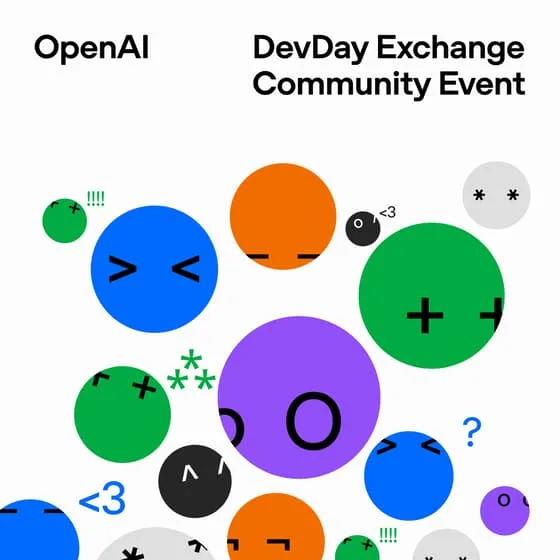
The session included hands-on demonstrations and discussions about using AI tools in development workflows. Each hackathon team received $150 in Codex credits to support experimentation during the event.
With only a few hours available, these tools gave participants another way to translate ideas into prototypes and test potential solutions.
The experience also demonstrated an important distinction: AI tools can accelerate parts of the development process, but the responsibility for identifying a meaningful problem, evaluating the output and deciding whether a solution is useful remains with the people building it.
Continuing to Support Practical AI Learning
AINOW Society's involvement in Hack for Humanity Skopje is part of its ongoing engagement with initiatives connecting AI education, responsible adoption and community participation.
Through its educational programmes, research activities, public discussions and partnerships, the organisation works to make artificial intelligence more accessible while encouraging people to understand both its possibilities and limitations.
Events such as Hack for Humanity provide a valuable complement to formal learning. Participants gain experience working together, making development decisions under real constraints and presenting their work for evaluation.
AINOW Society thanks The AI Collective Skopje, the local organisers, supporting organisations, participating teams and everyone who contributed to the event.
We congratulate the winning teams and all participants who dedicated their time and creativity to developing ideas for their communities.
We look forward to supporting more opportunities where AI knowledge can be put into practice and where local ideas have room to develop further.
Questions and answers
What was AINOW Society's role at Hack for Humanity Skopje?
AINOW Society participated through its founder and president, Suad Seferi, who served on the judging panel evaluating the participating teams' projects.
When did Hack for Humanity Skopje take place?
The hackathon took place on 3 October 2026 as part of Startup Revolution AI Summit 2026.
Who organised Hack for Humanity Skopje?
The event was organised through The AI Collective Skopje, with Monika Rizovska Tanevska involved in leading the local edition and support from INOVA and Women in Tech Macedonia.
What projects won the hackathon?
The winning project focused on wildfire mapping and water supplies. Second place went to a parking availability solution, while two environmental projects jointly received third place.
Sources
Tags: AI AI Collective Skopje AINOW Society Artificial Intelligence Hack for Humanity North Macedonia
More articles
- AINOW Joins Since AI Hackathon 2026
- Recap: AINOW Society at Humans in AI Week at FCSE
- AI Without Filters: Event Recap